foreword
this essay was not initially posted when it was written in 2024. it has been edited before posting for clarity. read the rationale for why, and a continuation of this conversation here.
intro
a lot of these ideas won't be new to anyone who's studied art, but many of those i speak to are primarily interested in stem, so some basis is needed. i'm not going to attempt here to define what constitutes art, and will mostly be talking about visual art, classical/traditional and modern/digital. i want us to have the common basis for discussing modern art. i was inspired to write this post after seeing this ai continued tf2 theme; it started as a twitter thread.
legitimacy
there's an idea across all forms of media that they need to attain some form of legitimacy to be seen as "art". a definition of art is difficult to pinpoint, what separates art and illustration, illustration from design, design from art? this line is drawn by you, i cannot do this for you. if you're in my audience, i'd just go off whether or not you think video games are art and figure it out from there.
art legitimizing ai
legitimacy is something sought after by ai evangelists, validation that their slapshot methods are good enough to work in the real world, good enough to replace you. and artists, poor things, give them just that. you might be familiar with the black cat redraw trend, if not, a quick summary is that someone generated an image of a girl and a black cat using ai, artists got mad and redrew it in an effort to prove some sort of supremacy, fuck ai, so on, so forth.
here's where the problem arises, and it's only really a problem if you care about the things you say, which isn't really the goal for a lot of these posts. sure, it's just them spitting at the very idea of ai - but you can tell there's an intention to say "i exist! i am unique! i'm real!", it's a gut reaction reaction to the fear or replacement. maybe i'm reading too deep into it, but that's how i see it (and what actually resonates with me), and yet it is not what the ai bros see.
here's the response of the person who first posted the black cat ai image:
Finally, I'd like to thank everyone who has taken the time to reinterpret the work of the girl and the black cat & shared in the comments & RTs. It has been a pleasant surprise to see so many quality works with different styles & approaches. In the end, I am left with the idea that an Al work has triggered a truly vibrant illustration movement. This makes me think that illustration will never die no matter how much Al advances, just as painting did not die when photography was born.
any critique of ai serves to be subsumed by ai, a perfect tool of capital. "there is no anti-war film", etc.
effort legitimizing art
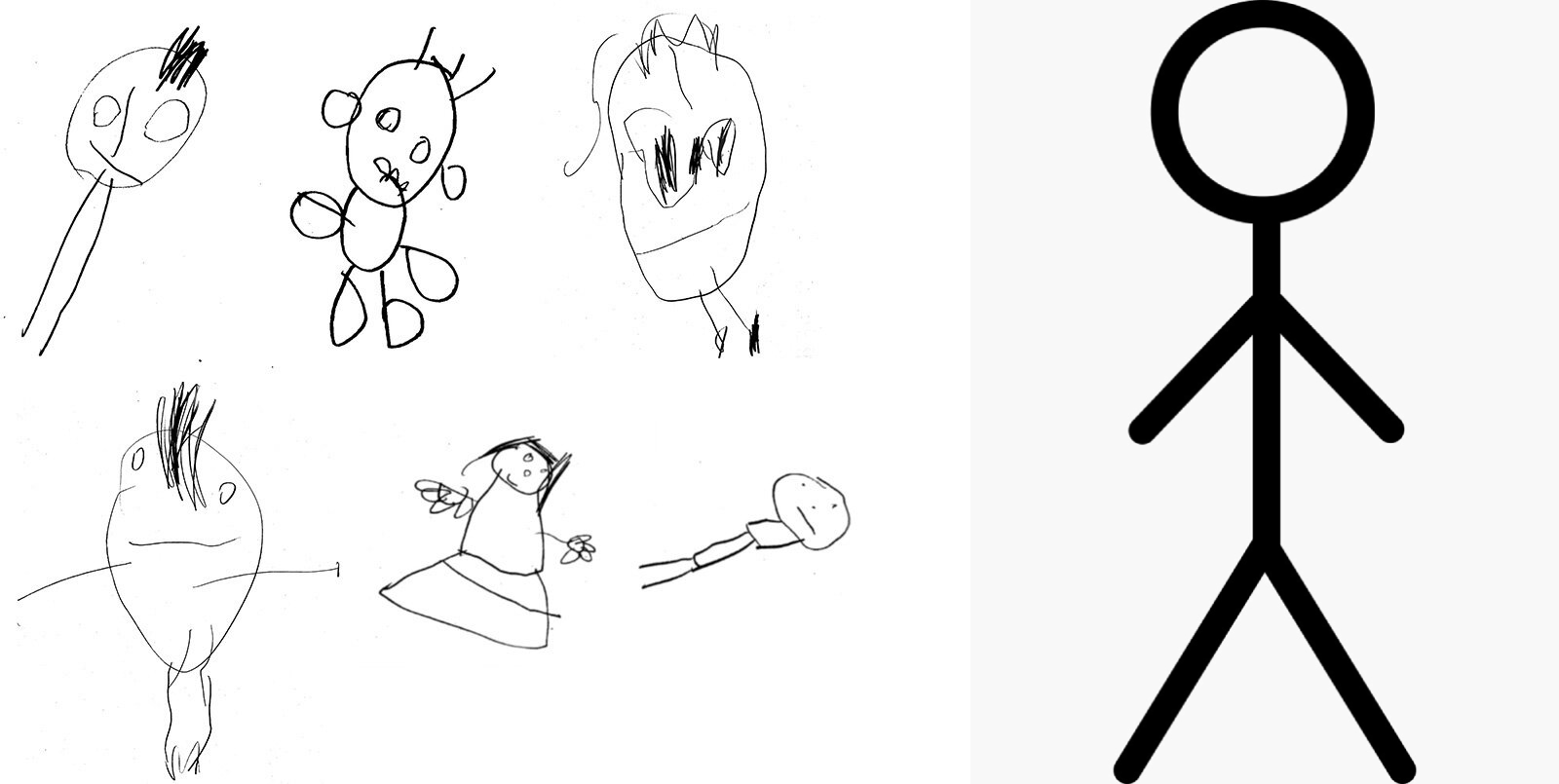 afford me this: you can see something about the artist in their art. this something doesn't actually have to be true, it just needs to be an inferred trait about the artist. it's a pretty broad definition, a stickman is art: we can tell if it's a kid doodling it, or an illustrator making it in a vector graphics software. we can also learn about an artist's value system in the subject and style of art, like a hyperrealist artist who cares about depicting reality in as perfect a way as possible, a task that's highly precise and indicative of a trained hand. perhaps the motivation is christlike, like in antiquity, to thank god for the world we live in and all that is good, for he is the ultimate architect! perhaps it is a form of narcissism, no one else can see the detail inherent in everything, it is my duty to enlighten them! idk, the painting isnt real. the artist isn't either, we just made him up.
for some, this effort legitimizes the art - we should care about it because the artist clearly does, and put in so much work. that HAS to be worth something! i do not wish to paint this in a bad light, as this mindset is not limited to classicists, puritans, traditionalists, etc. some view modern art through this lens as well. the fact that you cannot see brush strokes on a rothko is reason enough for us to believe in his genius, the subject matter is shadowed by technique. you just have to see it in person.
evaluating art solely off effort or technique does not lead to the right conclusions. it reads as "ai art is not art because it is easy", or "ai cannot make art because it does not impress me", but a lot of art is no longer defined by technical ability. we can look at picasso, he was clearly proficient and technically adept as teenager but grew into styles that were less reliant on that technical skill, yet those were more personal and had something more interesting to say. assuming that ai won't be able to generate images in a given style or with a given technique is short sighted, because then we concede ai art is fine as long as its quality is high enough.
stop obsessing over what counts as art
part of the reason i refused to define 'art' is that its pinned on this idea of legitimacy. art only counts if it's in a museum. art only counts if it's reviewed by a major outlet, if it's exhibited. this obsession with legitimacy will be our doom, as they will just make ai art that looks like work of the classic masters and put it in their own museums with their own publications etc.
when there are institutions in place by which something is legitimized, those institutions can be leveraged to legitimize things you shouldn't give time and attention to. all you really need to enjoy or experience art is the art itself, especially in the current age where digital art online is presented devoid of context.
first week sales numbers, billboard charts, publications, auction prices, advanced techniques, expensive instruments. legitimacy, inherently, is a flawed metric by which to evaluate art and can be gamed, leading to the worship of an oscar bait movie, a jeff koons piece, a taylor swift album. how does the art make you feel? does it sound/look/feel good?
authenticity
legitimacy is NOT authenticity. legitimacy is about the art being accepted as valid in the eyes of others, authenticity is about how you present yourself as an artist. it is not actually based on reality, it just needs match the idea in our head - think of the desert music in a video game. you have an idea of what that should sound like, even though it doesn't match music from any real place or culture. identity is something that can be controlled by an artist. an artist can lead you to believe in a persona if they think that it assists the art, like with tyler the creator becoming a different person every 3 years, richard d james having a billion different aliases, or even just banksy choosing to remain anonymous. anonymity is also an aspect of authenticity, and plays a role in our view of the artist.
the role of the artist
why does this matter? history! art has always toyed with the idea of the surreal, depictions of scenes and mythos that are not reality. this is rooted in many things, that being the entire domain of art history, but for our purposes we may simplify this motivation to social pressures, like religion and class. go to any classical gallery: there are so, so many paintings of jesus, scenes from the bible, or scenes from mythology.
very few paintings are of reality: these paintings may contain real things, like fields, gardens, castles, but even landscapes aren't apolitical. culturally, painting is form of respect, worship - the landscapes highlight the wealth of those who commissioned them. maybe their cattle is fatter than in real life. maybe the lord is less bald than in real life. maybe his maiden is more fair.
art is rarely ever about depicting reality as-is, and this is why they say all art is political, because art depicts a reality as framed by an artist with political views, living in a political world. as time has progressed, art has become more explicitly seen as the work of an artist. we now attempt to separate art from artist only in worst case scenarios.
when we look at art firmly as the product of an artist, this is when we start to care about who the artist is. this happens especially so when art is a literal product that is bought and sold, as it exists within the context of capitalism. if you're ever wondering why sotheby's auction prices are the way they are, this is often the reason.
what we can glean from this is that art is no longer about the art itself, it is a story being told, it is a book you write yourself. this is why people discuss art as something intended to challenge your preconceptions. this is what the postmodernists were talking about, like with duchamp: the idea that everything about art is up to the context of its creation, and very little about what is visually there.
some context
here are a couple pieces to understand this idea. you may not like the art itself, but they illustrate the point that the context surrounding art is more important than the art itself. you might be annoyed by me referring to art as pieces here, but thats what this warning is for.
keith haring, unfinished painting (1989)
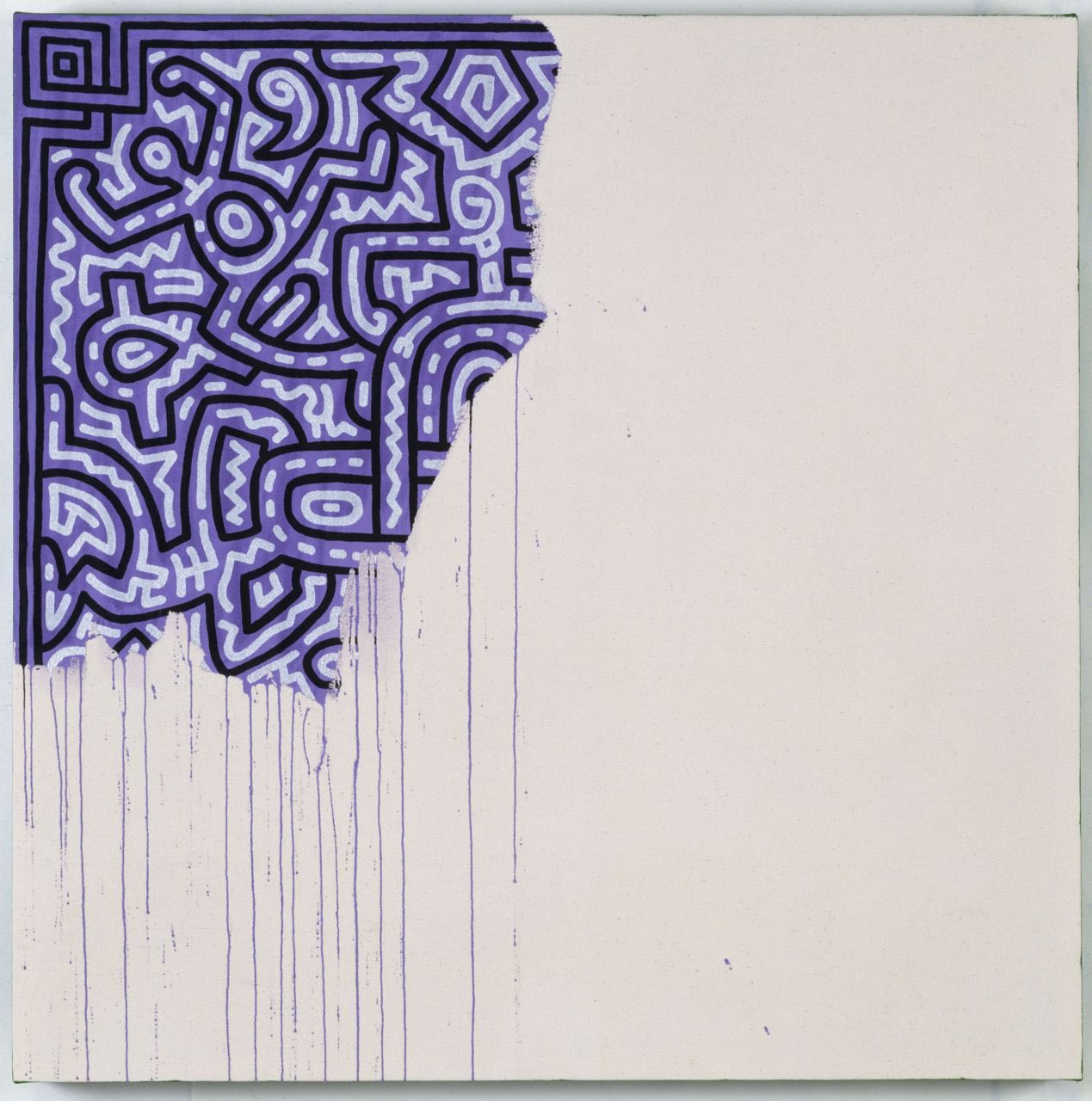 this is a piece by keith haring soon before he died. he left this piece intentionally unfinished, one may interpret the work as mirroring his own life being cut short.
félix gonzález-torres, untitled (portrait of ross in LA) (1991)
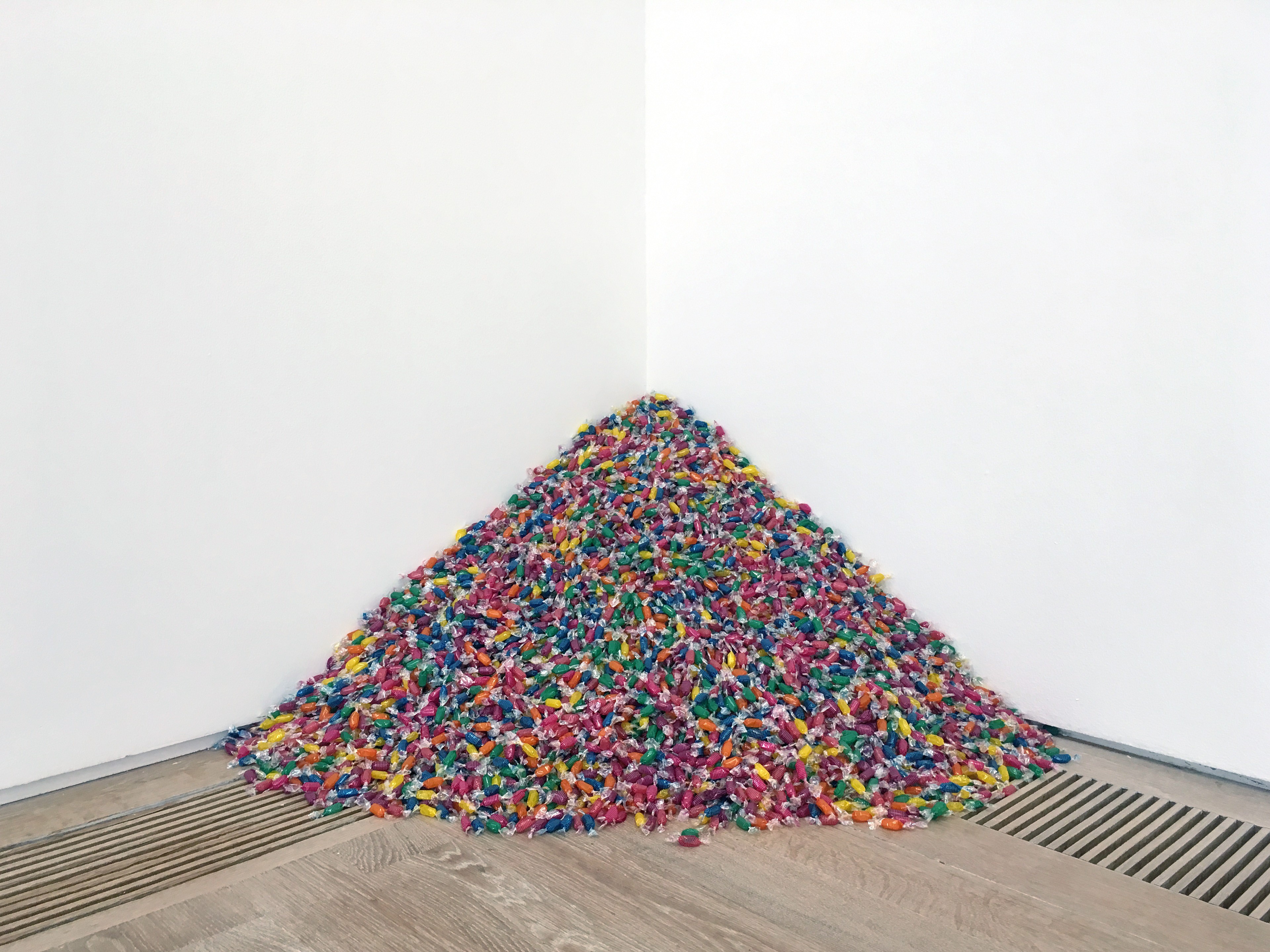 this is a sculpture presented as a pile of candy weighing 175 pounds. attendees are invited to take a piece of candy, and over time the sculpture may slowly vanish. ross, the namesake of the piece, was the artist's partner who died the year the piece was made.
even more context
i present these interpretations as fact, but experiencing art is a lot more about discovery. one thing i did not mention is that both deaths here were due to complications from aids, during the height of the aids crisis. both artists were gay. in that lens, some may view these works differently. maybe they now look like snapshots of history? do you now see the act of taking from the pile of candy as complicity in the crisis? are you from a homophobic culture and suddenly, these pieces aren't tragic anymore?
knowing the time that a work was made during can affect our interpretation of it quite significantly. in classical paintings, we can see symbolism through the types of flowers in a still life, for example. in modern art, the metaphor becomes the focus, and things are a little more implicit as we see above.
really, my only point here is that context informs our understanding of a work of art, and that context can evolve over time. a lot of artists reference their contemporaries, and you're only in on the bit once you study the history.
ultimately,
legitimacy no longer hinges on technical proficiency in the modern day, nor is it a factor for making great art anymore. this is frustrating for those who hate modern art, but art has simply moved past that since art that's only technically proficient often doesn't.
authenticity cannot be effectively leveraged by ai. it comes from a lived experience, and since ai has not lived a life, they cannot draw from experience to tell a story that matters. ai could put a pile of candy in the corner, but it would call it 'pile of candy'. ai cannot experience, and though it may tell you all about what it feels like to lose a loved one, it cannot point at one thing it has lost.
what matters now is that you have a life to live, the will to make something yourself, and the taste to make it compelling. i am begging you to make more art.
related
writings
Footnotes
Comments powered by GitHub Issues