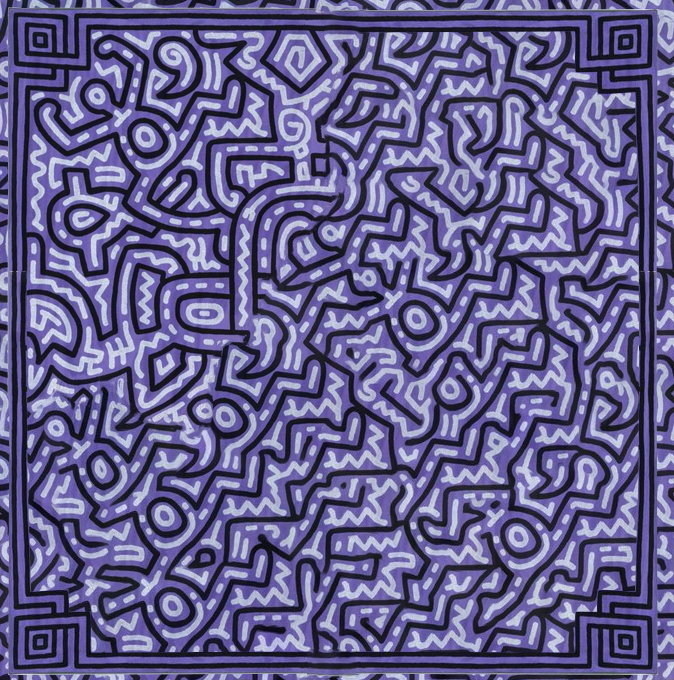
foreword
ai is a mosquito. it's something i've made a conscious effort to stay away from as a software engineer someone who codes, but it feels impossible to avoid. i'm conflicted, but my views on ai as a whole isn't something i'm going to get into here. it's too early. today, i'm going to try approaching ai as an artist first, engineer second. a lot of what is discussed here isn't new to a lot of you.
i used to love using ai dungeon back in ~2020, when it was still powered by gpt-2. it wasn't mindblowing or anything, i know about natural language processing, but its hallucinations actually felt compelling to me? i'm sure you know the deal by now: random context changes, repeating phrases over and over, complete logical failures were characteristic of the model, and it's something we continued to see in 3.5 as well as later early versions of LLaMa and other models before they got better at filtering it out. more on this later. i thought ai would always be a text based thing - an evolution of nlp methods - and i was very, very wrong. dall-e 2 launched in april 2022.
let's start talking about art - i'm not going to make an attempt here to define what constitutes art, and will mostly be talking about visual art, classical/traditional and modern/digital, primarily of the western canon. i'm bad at arguing, but i'm here to argue, so i'll be talking about a few topics and letting you connect the dots. we don't have to draw the same conclusions, but i want us to have the same basis regarding modern sensibilities towards art. i was inspired to write this post after seeing this ai continued tf2 theme - it started as a twitter thread.
legitimacy
there's an idea across all forms of media that they need to attain some form of legitimacy to be seen as "art". a definition of art is difficult to pinpoint, what separates art and illustration, illustration from design, design from art - this line is drawn by you, i cannot do this for you. if youre in my audience, id just go off whether or not you think video games are art and figure it out from there.
effort legitimizing art
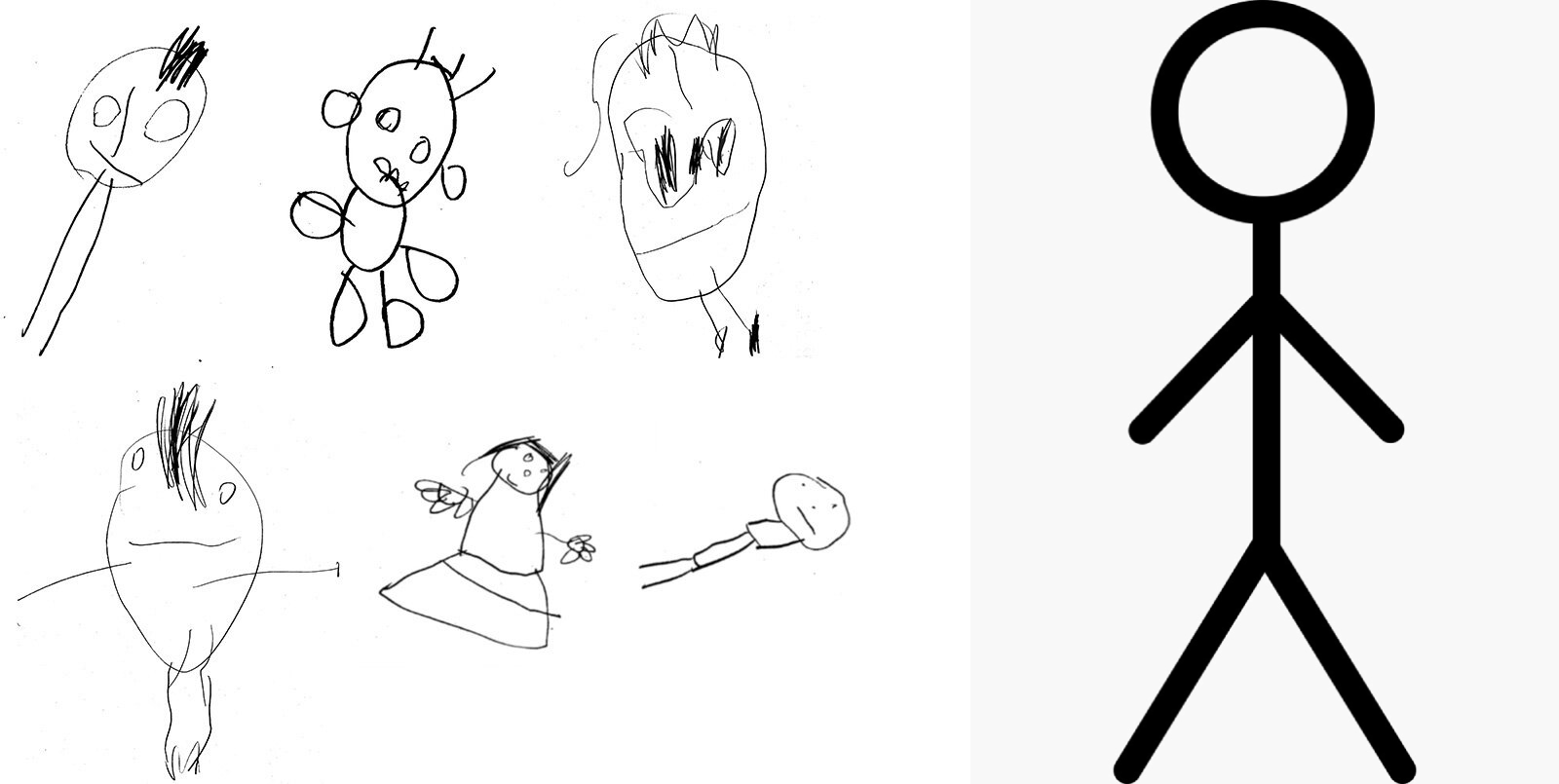 afford me this: you can see something (not necessarily true) about the artist in their art. it's a pretty broad definition, a stickman is art: we can tell if it's a kid doodling it, or an illustrator making it in a vector graphics software. we can also learn about an artist's value system in subject and style of art, a hyperrealist artist cares about depicting reality in as perfect a way as possible, a task that's highly precise and indicative of a trained hand. perhaps the motivation is christlike, like in antiquity, thank god for the world we live in and all that is good, for he is the ultimate architect! perhaps it is a form of narcissism, no one else can see the detail inherent in everything, it is my duty to enlighten them! idk, the painting isnt real. the artist isn't either. we just made him up.
for some, this effort legitimizes the art - we should care about it because the artist clearly does, and put in so much work. that HAS to be worth something! i do not wish to paint this in a bad light, as this mindset is not limited to classicists, puritans, traditionalists, etc. some view modern art through this lens as well. the fact that you cannot see brush strokes on a rothko is reason enough for us to believe in his genius, the subject matter is shadowed by technique. you just have to see it in person.
art legitimizing ai
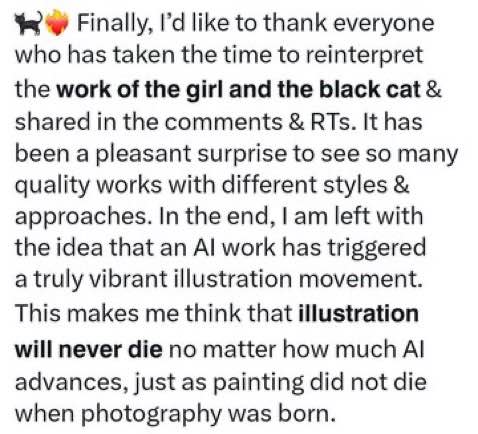
this legitimacy is now something sought after by the ai evangelists, validation that their slapshot methods are good enough to work in the real world. good enough to replace you. and artists, oh poor artists, we give them just that. you might be familiar with the black cat redraw trend, if not, a quick summary is that someone generated an image of a girl and a black cat using ai, artists got mad and redrew it in an effort to prove some sort of supremacy, fuck ai, so on, so forth.
here's where the problem arises, and it's only really a problem if you care about saying things that matter, which isn't really the goal for a lot of these posts. sure, it's just them spitting at the very idea of ai - but you can tell there's an intention to say "i exist! i am unique! i'm real!", it's a gut reaction reaction to the fear or replacement. maybe i'm reading too deep into it, but that's what resonates with me personally. But this is not what ai bros see.
"There's no such thing as an anti-war film."
- françois truffaut
art as authenticity
legitimacy is NOT authenticity, it is not based on reality, it just needs match the idea in our head - think of a video game desert theme. you have an idea of what that should sound like, even though it doesn't match music from any real place or culture. if you view art as an argument the artist is making to the viewer, this mirrors ethos. identity is something that can be controlled by the artist. an artist can lead you to believe in a persona if they think that it assists the art, like with banksy maintaining his anonymity, tyler the creator becoming a different person every 3 years, or billie eilish dressing like a black man just... because? i digress.
why does this matter? well, history, mostly. art has always toyed with the idea of the surreal, depictions of scenes and mythos that are not reality. this is rooted in many things, that being the entire domain of art history, but for our purposes we see this motivated by religion and class. go to any classical gallery: there are so, so many paintings of jesus, scenes from the bible, or scenes from mythology. very few paintings are of reality - these paintings are contain fields, gardens, castles - but even these landscapes are not apolitical. culturally, painting is form of respect, worship - the landscapes highlight the wealth of those who commissioned them. maybe their cattle is fatter than in real life. maybe their maiden is more fair. art has never been about depicting reality, and this is why all art is political, because it depicts a reality as framed by the artist.
and when we start to look as art firmly as the product of an artist, this is when we start to care about who the artist is. this happens especially so when art is a literal product that is bought and sold, as it exists within the context of capitalism. this is simply a fact. if you're ever wondering why sotheby's auction prices are the way they are, this is often the reason.
what evolves from this idea is that art is no longer about what is physically there. art is a story being told. it is a book you right yourself. this is why people discuss art as something intended to challenge your preconceptions. this is what the postmodernists were talking about, starting with duchamp. the idea that everything about art is up to the context of its creation, and very little about what is visually there.
while i'm here, fuck jackson pollock.
keith haring
félix gonzález-torres
untitled (portrait of ross in LA)
kobayashi yamato
brat summer
art as effort
art as social capital
readymades
dafen village
technology as art
camera lucida
ai usage in art
endnote.
related
video essays
writings
Footnotes
Comments powered by GitHub Issues